Home / Resin Bound Driveways
Resin Bound Driveways in Worcester
A plain explanation of what resin-bound surfacing is, where it works well and what to think about before committing to it.
What resin bound surfacing actually is
Washed, kiln-dried aggregate is mixed with a clear two-part resin in a forced-action mixer, then spread and trowelled over a prepared base. Because every stone is coated before it is laid, the finished surface holds together as one piece rather than as loose material sitting on top of a base.
Domestic drives are normally laid around 15–18mm deep, depending on the aggregate size and what sits beneath. Depth matters: laid too thin over a firm base, a resin surface will not tolerate turning car tyres for long.
How it differs from loose gravel
Loose gravel is the same idea without the binder. It looks similar on day one, then migrates — into the lawn, along the path, into the house, and out onto the road every time a car pulls off the drive.
- Nothing scatters, so edges stay clean and defined
- A firm surface for bins, pushchairs, bikes and wheelchairs
- No annual topping up
- Easier to sweep leaves off without lifting the stone
Permeability and drainage
Small voids between the coated stones let water pass through the surface. Whether the drive as a whole is permeable depends on what is underneath. Over a permeable sub-base, water soaks away naturally. Over existing concrete, water passes through the resin and then has to be taken somewhere — usually a channel drain or a border soakaway.
On plenty of Worcester frontages, particularly older properties where ground levels have crept up over the years, this is the part worth getting right. Water running towards a doorway is a bigger problem than the colour of the stone.
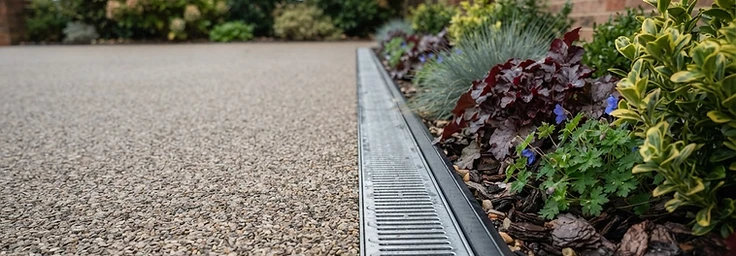
Appearance
The finish is flat, continuous and quiet underfoot, with a slight sheen from the resin when it is new that settles down over the first few months. There are no joints, no sand and no pattern to date the drive. Aggregate choice does most of the work visually — see colours and finishes.
Which properties it suits
- Existing drives with a sound concrete or tarmac base that can be resurfaced
- Drives being dug out and rebuilt properly with a new sub-base
- Front gardens where surface water needs to soak away rather than run to the road
- Paths, side accesses and parking bays alongside the main drive
It is less suitable where the ground moves, where a base is failing and cannot be replaced, or on very steep slopes where a coarser, more textured finish would be a better idea.
Common concerns
Will it crack? Resin flexes a little, but it follows the base. Cracks in a finished surface almost always mean movement below it, which is why preparation carries more weight than the resin itself.
Will it fade? Natural stone holds its colour. UV-stable resin keeps clear rather than yellowing; cheaper resins are where discolouration comes from.
Can it be repaired? Yes, though a patch may be slightly visible depending on age and how the surrounding surface has weathered. See maintenance and lifespan.
What happens next
The sensible starting point is a look at what you already have. We check the existing surface, measure the area and talk through drainage and edges before anything is priced — see preparation and installation for the full process.
Thinking about a resin driveway?
Send us a few details and we’ll arrange a look at the existing surface, measure up and give you a clear price.