Home / Installation
Preparation and Installation
Most of the work on a resin driveway happens before any resin arrives. This is how a job runs from first visit to final checks.
Almost every resin driveway that fails early fails because of what is underneath it. Depth, compaction, drainage and edging decide how the surface behaves in five or ten years. Everything below is written with that in mind.
The anatomy of a driveway
- 1
Site inspection
We look at the existing surface, check for movement, damp and cracking, and see where water sits after rain. This is where we decide whether the drive can be resurfaced or needs digging out.
- 2
Measurements
The area is measured properly, including paths, bays and awkward corners, along with edging runs and any kerb work.
- 3
Assessing the existing surface
Concrete and tarmac are checked for stability and levels. Sound bases are cleaned and prepared; failing ones come up.
- 4
Excavation
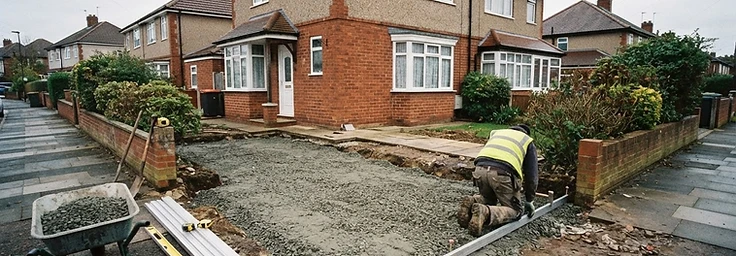
Where a rebuild is needed, the old surface and soft ground are dug out to depth and the spoil removed.
- 5
Sub-base
Compacted MOT type 1 or a permeable equivalent, laid in layers and whacked down to give a firm, even platform.
- 6
Edging
Aluminium, block or brick edging is set to hold the surface and give the drive its finished line.
- 7
Drainage
Falls, channel drains or a soakaway are formed so water leaves the drive where it should, not towards the house.
- 8
Surface preparation
The base is primed or a binder course laid where required, and left clean and dry ready for the resin.
- 9
Laying
Aggregate and resin are mixed on site in batches and trowelled out to an even depth, working across the drive in one continuous pour.
- 10
Curing and final checks
The surface is left to cure, edges are cut in and tidied, and the site is cleared before we hand it back.
How long it takes
A typical domestic drive around Worcester takes a few days. Groundwork accounts for most of that; the resin surface itself normally goes down in a day. Weather matters — resin is not laid onto a wet base or in heavy rain, so a damp week can push things back.

What we need from you
- Vehicles moved off the drive for the duration
- Access to an outside tap and, in some cases, a power point
- Somewhere reasonable to park a van and stack materials
- A word with us early if there are gates, steps or levels you want changed
Living with the work
Excavation is the noisy, dusty part. Once the sub-base is down the site is tidy again. The surface is usually walkable within several hours of laying and takes vehicles after a day or so, depending on temperature — we tell you on the day rather than guessing in advance.
Older Worcester properties
On older homes we take extra time over levels. Ground around period properties has often been built up over the years, and a new surface laid without thought can leave water heading towards a doorstep or an air brick. Getting the falls and edge details right is straightforward if it is considered before the digger arrives.
Cost implications of the groundwork above are set out on our cost page, and aftercare on maintenance and lifespan.
Book a site assessment
We’ll check the existing surface, levels and drainage, and tell you honestly what your drive needs.